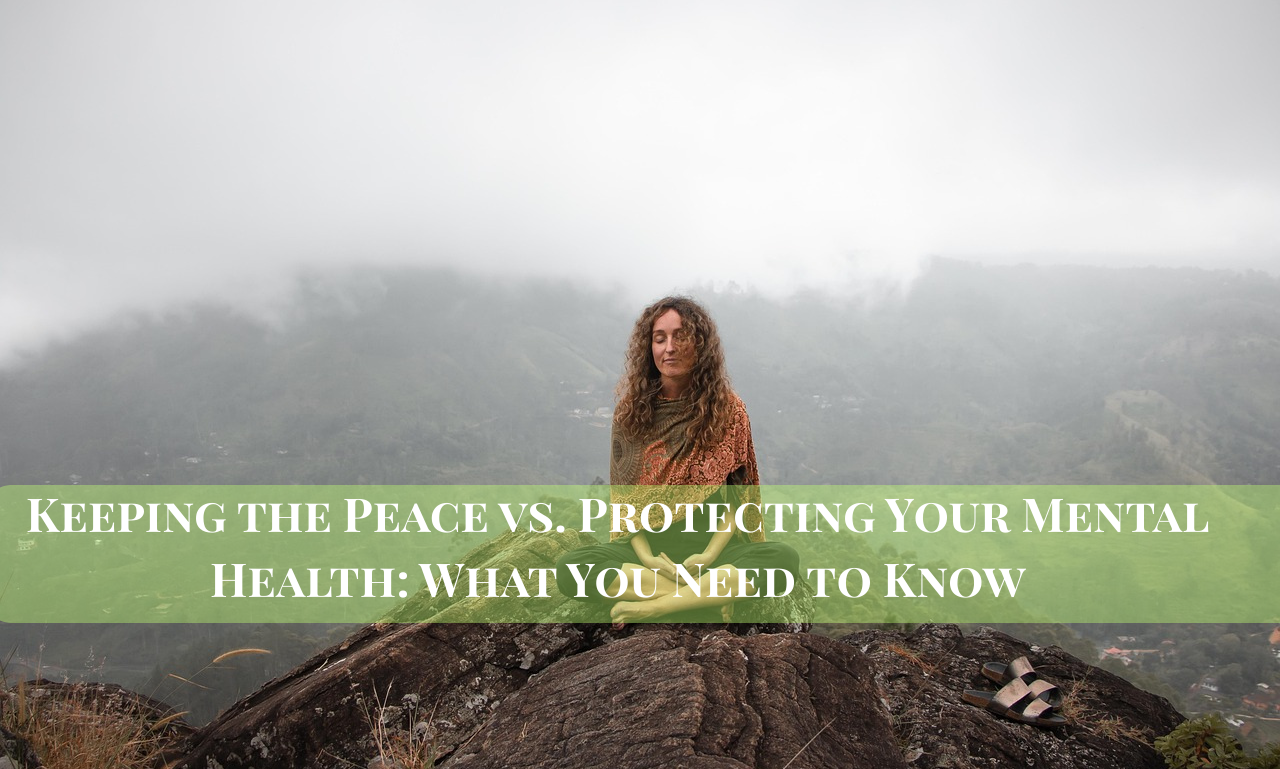
Speaking From the Heart: Keeping the Peace Vs. Protecting Your Mental Health: What You Need To Know.
Many people are taught that keeping the peace is the “right” thing to do. From an early age, we are encouraged to avoid conflict, remain agreeable, and prioritize harmony—even when it causes personal discomfort. While this approach may reduce tension in the short term, keeping the peace at the expense of your mental health can lead to long-term emotional harm.
Understanding the difference between keeping the peace vs. protecting your mental health is essential for emotional well-being, healthy relationships, and long-term balance.
What Does “Keeping the Peace” Mean for Mental Health?
Keeping the peace often involves avoiding confrontation or disagreement to maintain harmony. This may look like:
Agreeing when you want to say no
Staying silent to avoid upsetting others
Minimizing or dismissing your own emotions
Taking responsibility for how others feel
While these behaviors may appear cooperative or selfless, they are often learned survival strategies reinforced by families, workplaces, and social environments. Over time, this pattern can lead to emotional suppression and internal stress.
Peace built on avoidance is fragile. When emotional needs are consistently ignored, stress accumulates beneath the surface, often resulting in resentment, emotional exhaustion, or a loss of self-identity.
The Hidden Mental Health Cost of Always Keeping the Peace
Consistently prioritizing harmony over honesty can negatively affect mental health in several ways, including:
Chronic stress and anxiety
Emotional burnout
Difficulty identifying personal needs
Low self-esteem
Increased resentment in relationships
When emotions are repeatedly suppressed, the body and mind find other ways to express distress. This may appear as irritability, fatigue, sleep problems, or emotional disconnection.
What It Means to Protect Your Mental Health
Protecting your mental health means recognizing that your emotional safety matters just as much as maintaining external harmony. It involves acknowledging your limits and honoring them without guilt.
Protecting your mental health includes:
Recognizing emotional triggers
Setting healthy boundaries
Allowing yourself to feel and express emotions
Prioritizing rest and recovery
Choosing emotionally safe environments
This does not mean being aggressive or dismissive of others. Rather, it means responding to situations with self-awareness and emotional honesty. When mental health is protected, relationships tend to become more authentic and balanced.
What It Means to Protect Your Mental Health
Protecting your mental health means recognizing that your emotional safety matters just as much as maintaining external harmony. It involves acknowledging your limits and honoring them without guilt.
Protecting your mental health includes:
Recognizing emotional triggers
Setting healthy boundaries
Allowing yourself to feel and express emotions
Prioritizing rest and recovery
Choosing emotionally safe environments
This does not mean being aggressive or dismissive of others. Rather, it means responding to situations with self-awareness and emotional honesty. When mental health is protected, relationships tend to become more authentic and balanced.
Why Setting Boundaries Protects Your Mental Health
Boundaries are essential for protecting mental health and preventing emotional burnout. They clarify what is acceptable and help preserve emotional energy.
Examples of healthy boundaries include:
Saying no without over-explaining
Limiting time with emotionally draining individuals
Asking for space when overwhelmed
Clarifying expectations in relationships
Boundaries are often misunderstood as selfish or cold, but in reality, they are a form of self-care. Healthy boundaries reduce resentment and support more respectful, sustainable relationships. True peace exists where boundaries are honored—not ignored.
Self-Care Is a Mental Health Necessity
Self-care is not a luxury or indulgence—it is a foundational mental health practice. Without it, emotional resilience becomes difficult to maintain.
Effective self-care practices include:
Maintaining consistent sleep routines
Eating balanced meals
Engaging in regular physical movement
Practicing mindfulness or breathing exercises
Allowing time alone to reset
Participating in creative or relaxing activities
Self-care helps regulate the nervous system, improves emotional regulation, and strengthens the ability to cope with stress and communicate effectively.
Healthy Communication vs. Emotional Avoidance
Many people keep the peace by avoiding difficult conversations. While this may prevent immediate discomfort, it often creates long-term emotional strain.
Healthy communication involves:
Expressing needs calmly and clearly
Listening without defensiveness
Addressing concerns early
Taking breaks when emotions feel overwhelming
Conflict does not automatically damage relationships. In fact, constructive communication can strengthen trust and emotional connection. Avoidance, on the other hand, often leads to misunderstanding and emotional distance.
Protecting your mental health means allowing yourself to speak honestly—even when it feels uncomfortable.
When Keeping the Peace and Mental Health Can Coexist
There are moments when choosing peace is a healthy and intentional decision. Not every disagreement requires engagement, and not every situation deserves emotional energy.
Keeping the peace supports mental health when it is chosen consciously—to preserve emotional well-being—rather than out of fear, guilt, or pressure. The key difference lies in intention.
Peace should never come at the cost of self-respect.
Signs You May Be Sacrificing Your Mental Health for Peace
You may be prioritizing peace over mental health if you frequently:
Feel emotionally drained after interactions
Struggle to express personal needs
Fear conflict excessively
Feel responsible for others’ emotions
Experience ongoing resentment
These signs are not failures. They are indicators that your emotional needs deserve care and attention.
Finding Balance Through Support
Learning to protect your mental health while maintaining relationships is a process. It often involves unlearning people-pleasing patterns, developing emotional awareness, and building confidence in communication.
Therapy provides a supportive space to explore boundaries, self-worth, and emotional regulation. With the right tools and guidance, it is possible to experience both peace and emotional well-being.
Final Thoughts
Keeping the peace may feel safer in the moment, but true mental health comes from honesty, boundaries, and self-respect. Real peace is not silence—it is feeling secure, valued, and emotionally balanced with both others and yourself.
At Hearts to HealingTherapy, the focus is on helping individuals reconnect with themselves, establish healthy boundaries, and create a life rooted in emotional balance and inner strength.